

Hello everyone,
I am so excited for this episode! I have tracked my ovulation for the past six months using four different methods to determine my ovulation window. In this video/article, I review the methods and analyse my 6 months of data, including an irregular 44-day cycle. This is useful for those trying to conceive, trying to avoid pregnancy, or trying to understand if they ovulate during their irregular cycles.
As a reminder, this is a five-part series to deep dive into our ability to conceive.
PS: the articles are both in video and written format to fit both preferences of consuming information.
Exclusive for members: This in-depth article is part of our premium content. Subscribers enjoy comprehensive PCOS deep-dives, customised meal plans, expert medical insights, and direct access to ask me questions.
You can either subscribe monthly or purchase access to this article only.
The four ways I used to find my ovulation
Skin temperature with Oura
Temperature with Natural Cycles
Vaginal temperature with OvuSence
Leutenizing hormone with LH strips
Skin Temperature
For this, I used the Oura ring. This is the most straightforward method for tracking your ovulation. You only need to wear the ring and charge it. You can easily see when your temperature shifts upwards. This is due to progesterone. As soon as we ovulate, progesterone takes over to thicken the endometrium, and with this, a temperature increase occurs.
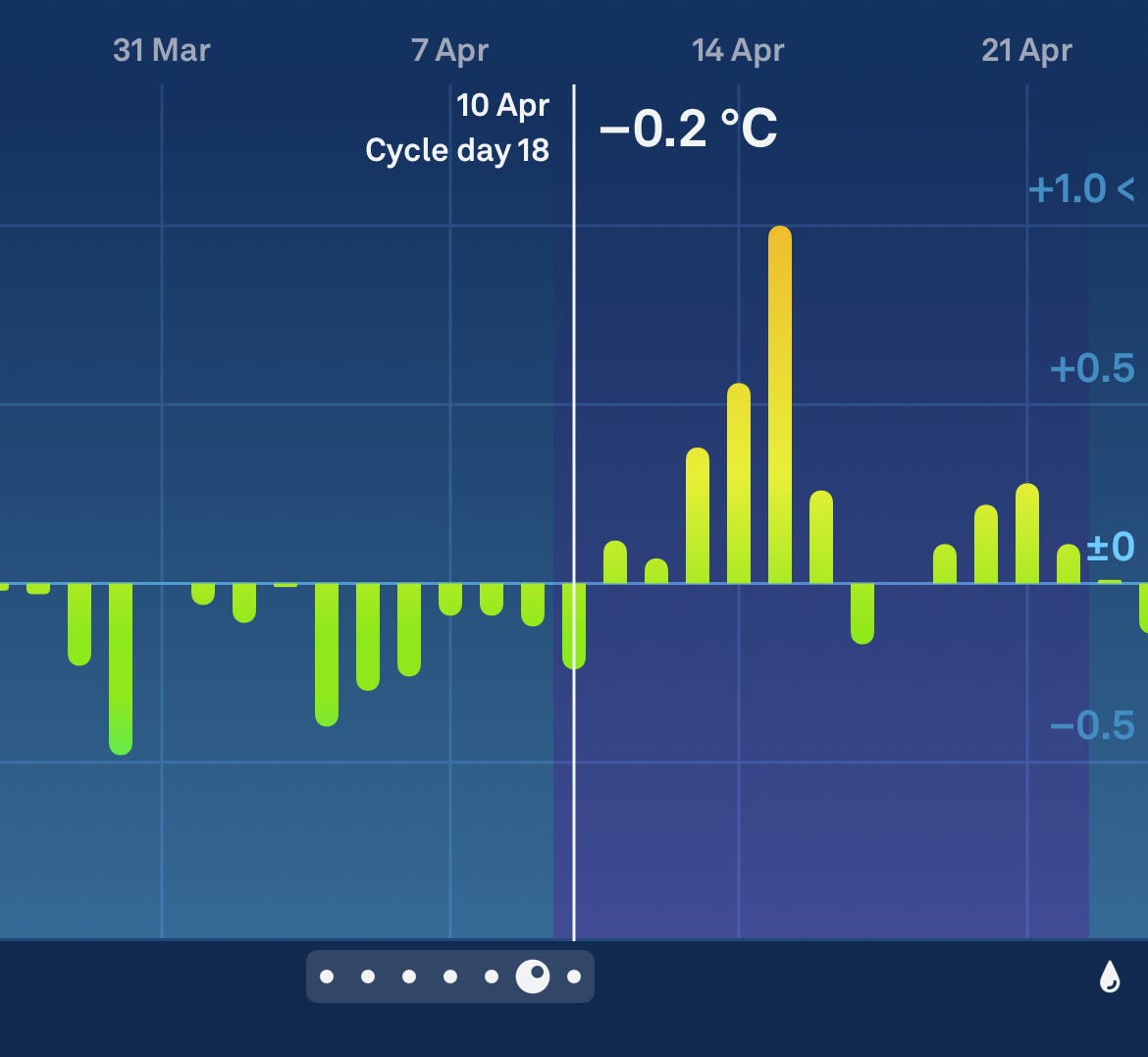
The only downside is that skin temperature is considered less accurate than basal or vaginal temperature; however, after using it for a few months and establishing a consistent pattern, you can rely on it with greater accuracy. However, it is not studied for accuracy.
Natural Cycle Algorithm
For this, I have connected the Oura ring to this. Natural Cycles has an FDA-approved algorithm for contraception. They also send you the manual thermometer. Overall, the Natural Cycles detected ovulation one day after Oura, so they were pretty close. In the Natural Cycles app, you can also track your mucus, which is another way to know if you are ovulating and use LH strips. Unless you use the normal thermometer, I found this a bit useless overall.
LH Strips
LH strips work on Luteinizing hormone, which is the problematic hormone for us. Luteinizing hormone triggers ovulation when it is released, so it is at its highest 24-48 hours before ovulation. By peeing on one of these strips, you can detect when LH peaks:
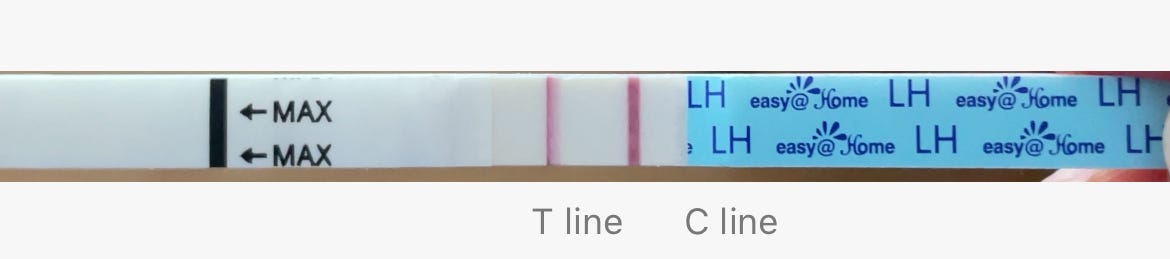
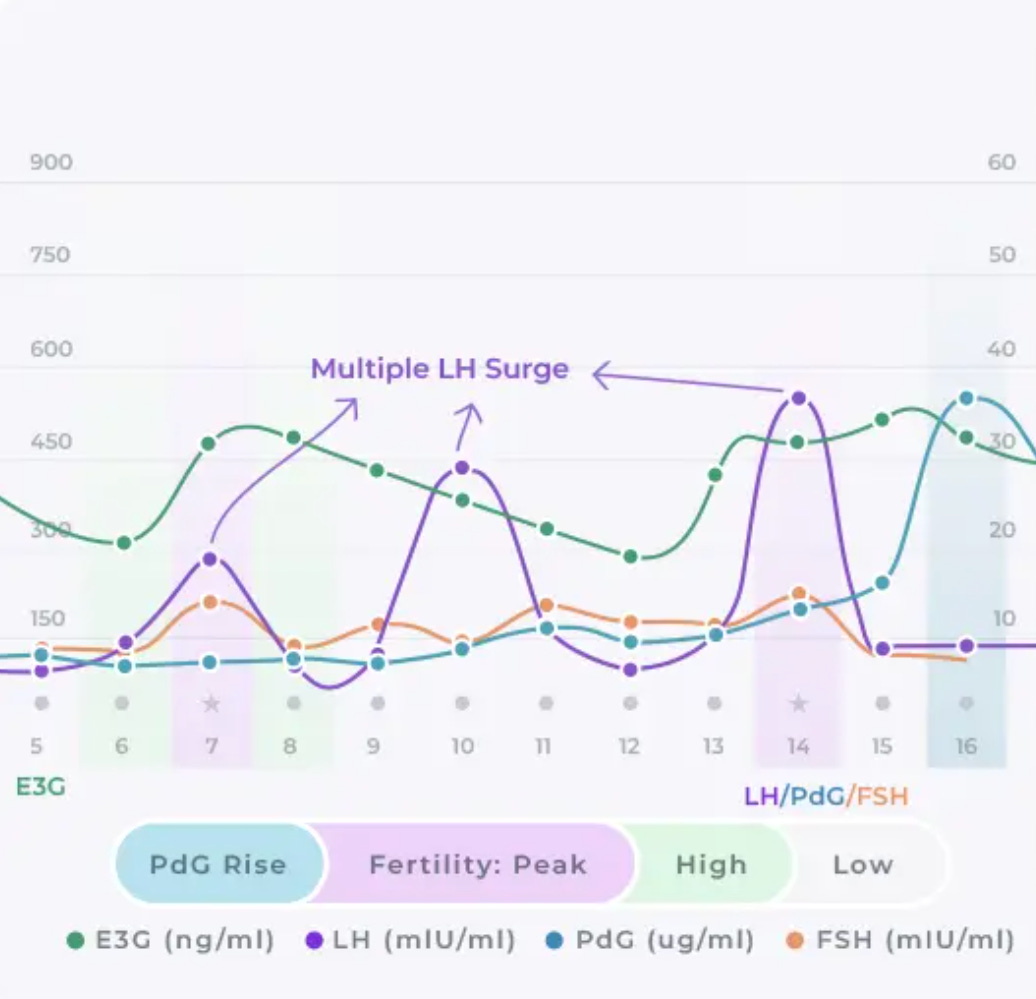
Women with PCOS are known to have higher LH levels - this means our LH peaks multiple times throughout the month without reaching the threshold needed for ovulation. Like this:
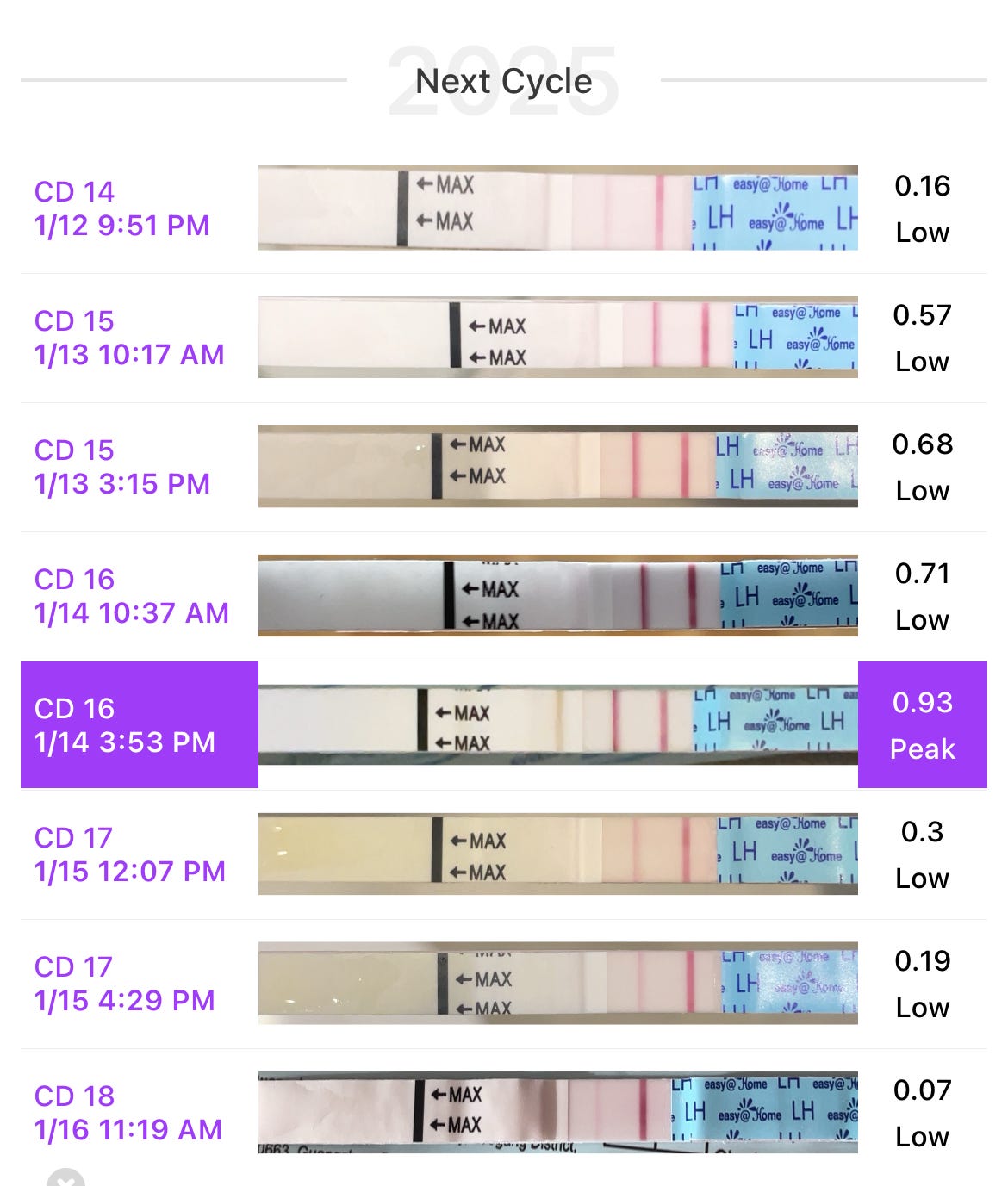
However, if you have regular menstrual periods, this is an excellent way to confirm ovulation. Here is a surge I had in January.
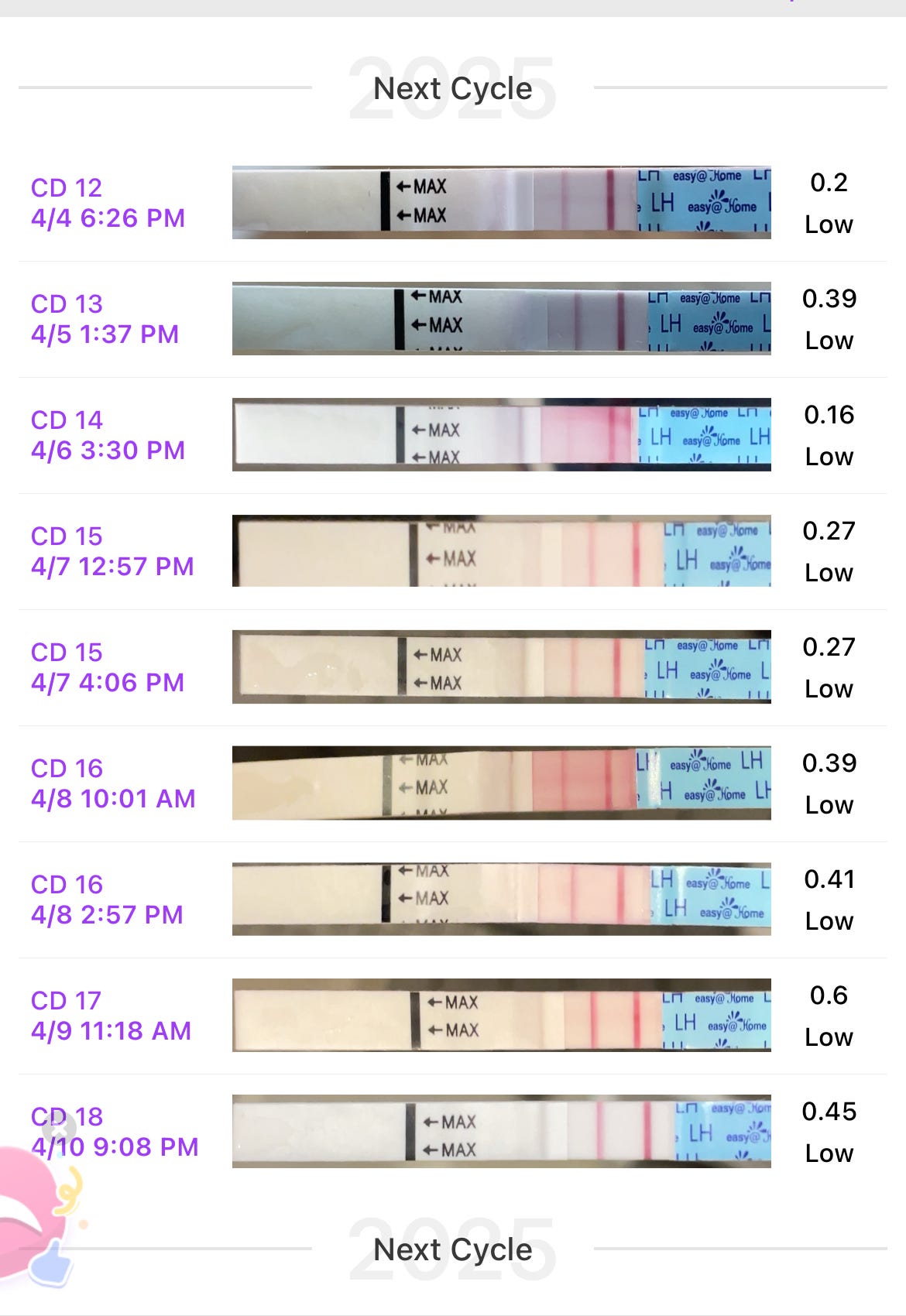
The challenge with this method is that it depends on when you take the test, the concentration of your urine and trying to catch this surge. Sometimes it doesn’t detect it like this cycle here:
Vaginal Temperature
Lastly, I tried Ovusense [not sponsored]. This weird device that you insert into your vagina at night takes readings throughout the night. I only managed to wear this for one cycle.
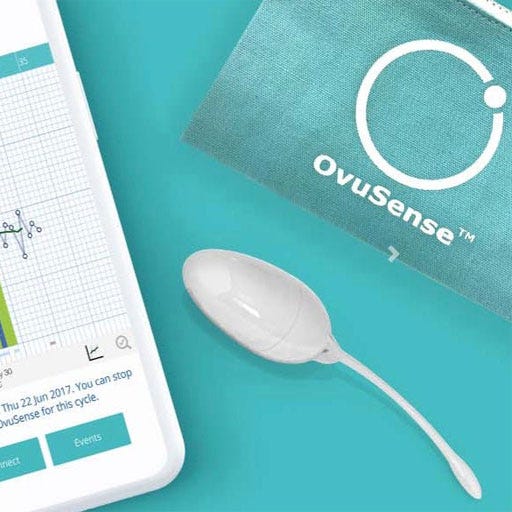
I am personally not one who uses tampons, so for me, this was extremely uncomfortable to wear. They advertise specifically for PCOS, as vaginal temperature may be a bit more accurate at identifying temperature changes. They don’t have studies on their device done specifically on women with PCOS, so I'm not sure how true that is.
For the cycle that I used it on, it detected my ovulation well.
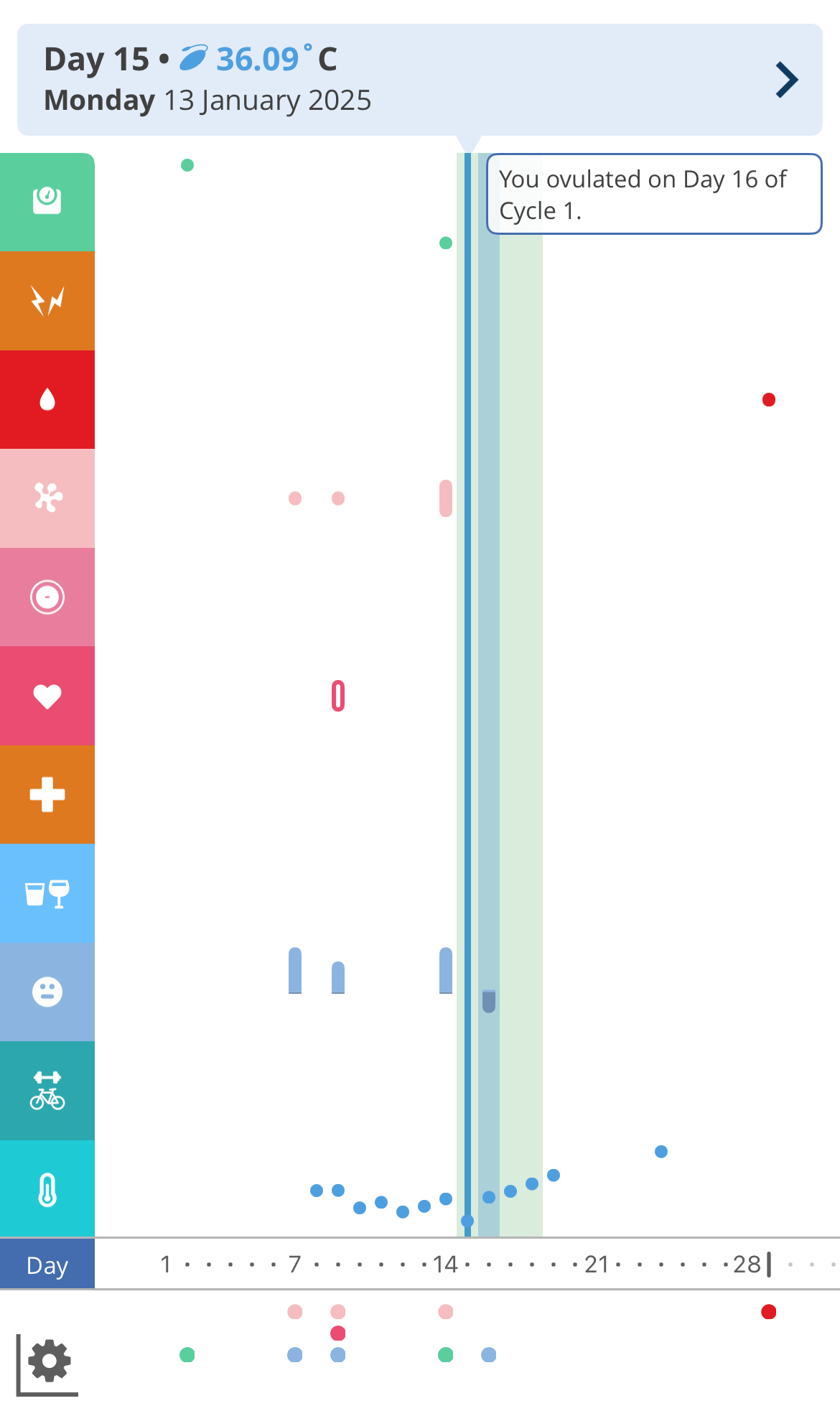
My data
The methods identified by ovulation are slightly different days, but always on the 16/17/18th day mark. I don’t expect these to be 100% accurate, and I found that knowing this is more or less when I ovulate is super helpful.
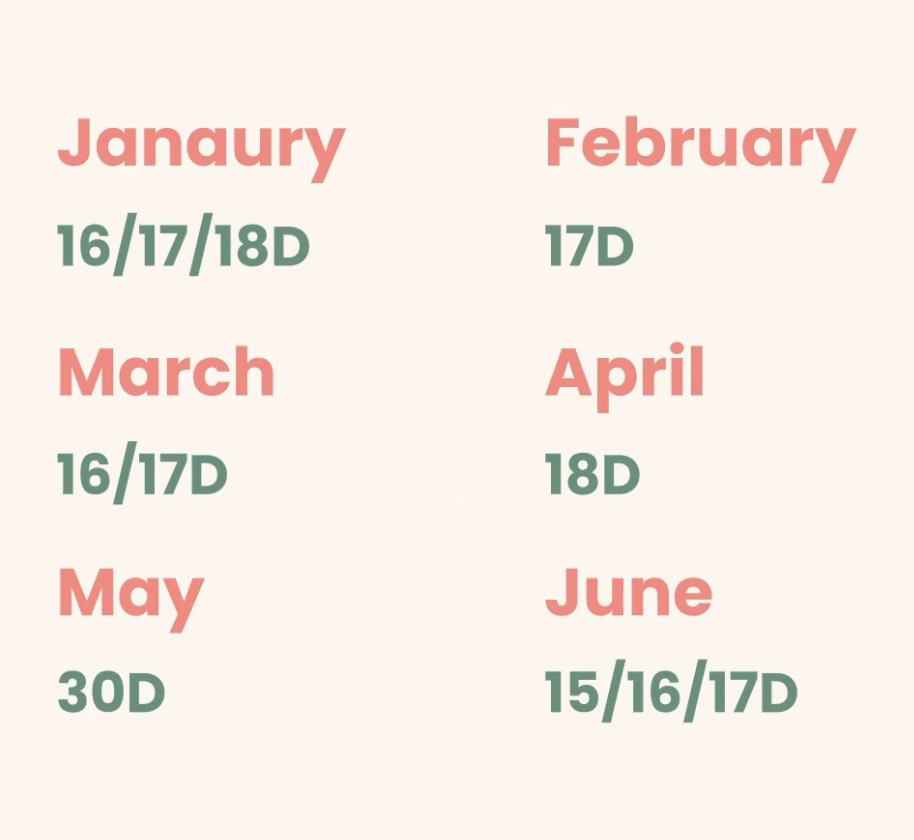
I did have a very irregular cycle of 44 days when I only ovulated on day 30. Just because you have 40-day cycles, it doesn't mean you can’t conceive if you manage to catch the ovulation window, so it may be useful to know when you are ovulating, as you can get pregnant even with irregular cycles. It’s also helpful to know so you can tell when your period will come, as the luteal phase is usually 10-15 days long.
My recommendations
If you can afford it, the Oura ring is the easiest and most comfortable to use; however, it might not be the most accurate.
If you have irregular cycles and you are trying to conceive for a prolonged time, I would recommend the Ovusense paired with LH strips.
You can also take your temperature normally with a thermometer in your mouth every morning before getting out of bed. This is the oldest and cheapest method. I find the effort involved in that a bit much, but if you can gain the habit of doing it every morning, it’s also an accurate measurement.
I hope you enjoyed this article.
See you next Sunday,
Francesca


