

Hi there,
Welcome back to our series on why we are so obsessed with thinness.
When did body size become a moral judgement, and who decided what a “normal” body looks like?
When plump was beautiful
It’s easy to assume that thinness has always been the ideal. It hasn’t.
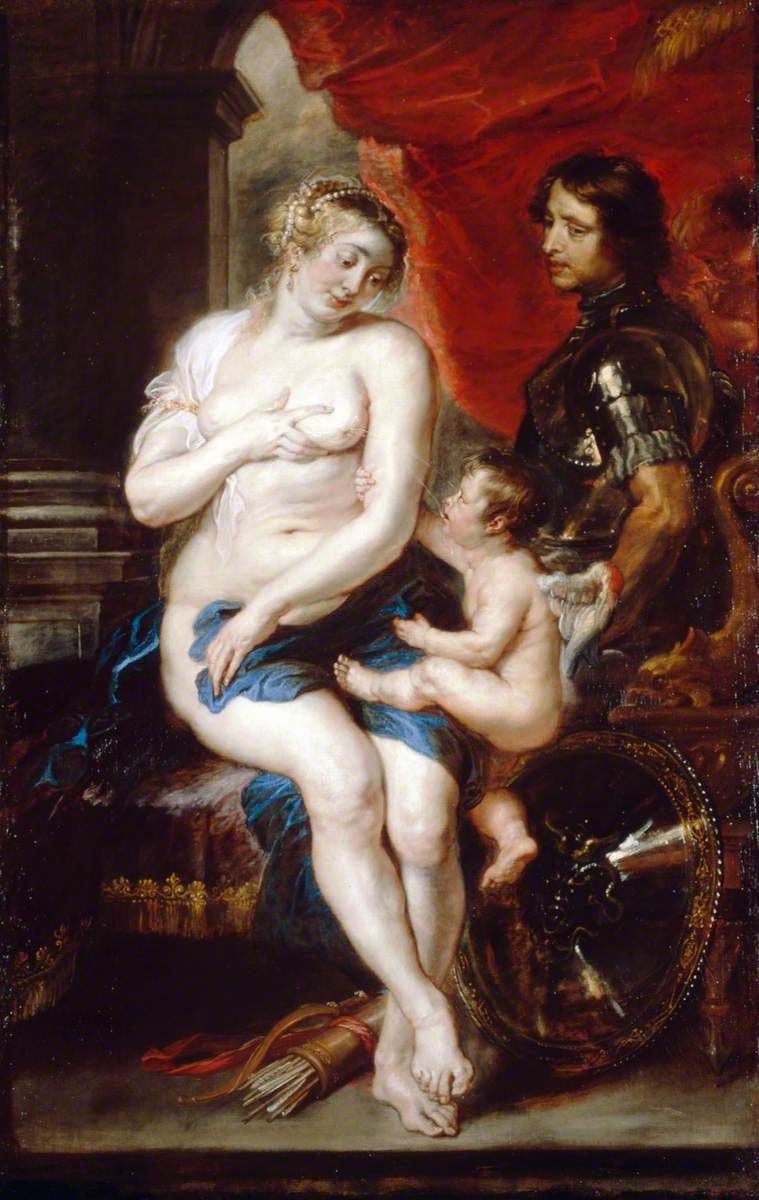
In her book Fearing the Black Body: The Racial Origins of Fat Phobia, sociologist Sabrina Strings traces how European and American ideas about fat changed from the Renaissance to today. She starts with painters like Peter Paul Rubens, when shapely, pale Venuses were the ideal and plumpness was preferred.
Sugar, reason and self-control
By the 16th century, slavery and colonisation in the Americas were producing a new commodity for Europe: sugar. As it became widely available, European diets and bodies changed, and anxieties about fat grew, first among men.
During the early Enlightenment, thinness started to be admired as a sign of male rationality, but mainly in men. Writers from Shakespeare to Descartes associated a large body with a dull mind, and overeating with an obstacle to higher thought. After the Reformation, self-regulation became central to morality, and gluttony was a sin to be avoided.
So before race even enters the picture, we can see the idea that still shapes how we think today: a thin body signals discipline and intelligence, and a larger body signals the opposite.
The thing is the medical establishment did not start its campaign against obesity until the early 20th century, by which point anti-fat attitudes were already deeply embedded in the culture. In other words, the moral judgement came first, and the health argument came later, which I believe still prevails today. I doubt that any of the media outlets and people making women feel less valuable due to their size have anything to do with wanting a healthier life for them.
When fat became a racial category
According to Strings, fat became a tool for categorising people by race in the late 17th century. Early race scientists such as Georges Cuvier, Julien-Joseph Virey and Georges-Louis Leclerc (Comte de Buffon) wrote about:
Africans as gluttonous, idle and unintelligent.
Over time, a thin body shifted from a sign of illness to evidence of European moral and intellectual superiority.
These writings focused particularly on the bodies of women from southern Africa. The best-known example is Sara (Saartjie) Baartman, a Khoikhoi woman from the Eastern Cape. In 1810 she was taken to London and exhibited for paying audiences, and later displayed in Paris, where she was studied by French scientists.
She died in Paris in 1815. Her remains were displayed in a French museum and were only returned to South Africa in 2002, after Nelson Mandela formally requested them.
Her story is covered in this amazing video if you want to know more:
In the 18th century, this new slender ideal merged with the English moral emphasis on self-discipline. British women travelling in the Ottoman Empire, such as Lady Mary Wortley Montagu, wrote about Turkish women’s fuller bodies and eating habits in ways that set up slim European women as superior.
Crossing the Atlantic
In 19th century America, the story took another turn. Interestingly, there was first a moral panic that American women were too thin. But by the mid-1800s, popular magazines like Harper’s Bazaar and Godey’s Lady’s Book were publishing articles linking fat to so-called “African savagery”, and to crime and deformity.
At the same time, waves of new immigrants were arriving, and established white Americans were anxious to protect their status.
Proving you are white
If fatness became associated with Blackness, and white Americans worked hard to prove they were white, then it became very important for white women not to be fat. So the same idea that was used against Black women also came to police white women’s bodies.
It’s worth saying that Strings’ work is an interpretation of history, and other historians also emphasise class and religion as drivers of the thin ideal. Her book weaves these together rather than treating race alone.
Next week
We’ve seen how body size became a moral marker, and how a number was attached to it. Next week, we look at how fashion turned that marker into an aesthetic: from the 1920s flapper to Chanel, Dior, Marilyn Monroe and heroin chic, and what feminism had to do with it.
See you next Sunday,
Francesca
References
American Medical Association. (2023). AMA: Use of BMI alone is an imperfect clinical measure. https://www.ama-assn.org/public-health/chronic-diseases/ama-use-bmi-alone-imperfect-clinical-measure
Caleyachetty, R., Barber, T. M., Mohammed, N. I., Cappuccio, F. P., Hardy, R., Mathur, R., Banerjee, A., & Gill, P. (2021). Ethnicity-specific BMI cutoffs for obesity based on type 2 diabetes risk in England: A population-based cohort study. The Lancet Diabetes & Endocrinology, 9(7), 419–426. https://doi.org/10.1016/S2213-8587(21)00088-7
Carlan, H. (2020). Review of “Fearing the Black Body: The Racial Origins of Fat Phobia,” by Sabrina Strings. UCLA Center for the Study of Women. https://csw.ucla.edu/2020/11/23/fearing-the-black-body-the-racial-origins-of-fat-phobia-by-sabrina-strings-nyu-press-2019/
Eknoyan, G. (2008). Adolphe Quetelet (1796–1874): The average man and indices of obesity. Nephrology Dialysis Transplantation, 23(1), 47–51. https://doi.org/10.1093/ndt/gfm517
Fletcher, I. (2014). Defining an epidemic: The body mass index in British and US obesity research 1960–2000. Sociology of Health & Illness, 36(3), 338–353. https://doi.org/10.1111/1467-9566.12050
Keys, A., Fidanza, F., Karvonen, M. J., Kimura, N., & Taylor, H. L. (1972). Indices of relative weight and obesity. Journal of Chronic Diseases, 25(6), 329–343. https://doi.org/10.1016/0021-9681(72)90027-6
NICE. (2022). Keep the size of your waist to less than half of your height, NICE recommends. https://www.nice.org.uk/news/articles/keep-the-size-of-your-waist-to-less-than-half-of-your-height-nice--recommends
Sendur, S. N., & Yildiz, B. O. (2021). Influence of ethnicity on different aspects of polycystic ovary syndrome: A systematic review. Reproductive BioMedicine Online, 42(4), 799–818. https://doi.org/10.1016/j.rbmo.2020.12.006
South African History Online. (n.d.). Sara “Saartjie” Baartman. https://sahistory.org.za/people/sara-saartjie-baartman
Strings, S. (2019). Fearing the Black Body: The Racial Origins of Fat Phobia. New York University Press. ISBN 9781479886753
Sturgis, M. (2020). Review of Fearing the Black Body: The Racial Origins of Fat Phobia by Sabrina Strings. Lateral. https://csalateral.org/reviews/fearing-black-body-racial-origins-fat-phobia-strings-sturgis/
The Living Archives. (2020). Strings, Sabrina (2019): Fearing the Black Body (includes NYU Press description). https://thelivingarchives.org/en/strings-sabrina-2019-fearing-the-black-body/
University of Geneva, ArThemis. (n.d.). Sarah Baartman: France and South Africa. https://plone.unige.ch/art-adr/cases-affaires/sarah-baartman-2013-france-and-south-africa
Disclaimer: We are all unique in our own ways, so this information is for educational purposes only. In my communications, I summarise research data and bring my experience. This shouldn’t be viewed as medical advice at any point. Please further consult your healthcare provider about your health needs.