

Hi there,
Welcome back to our series.
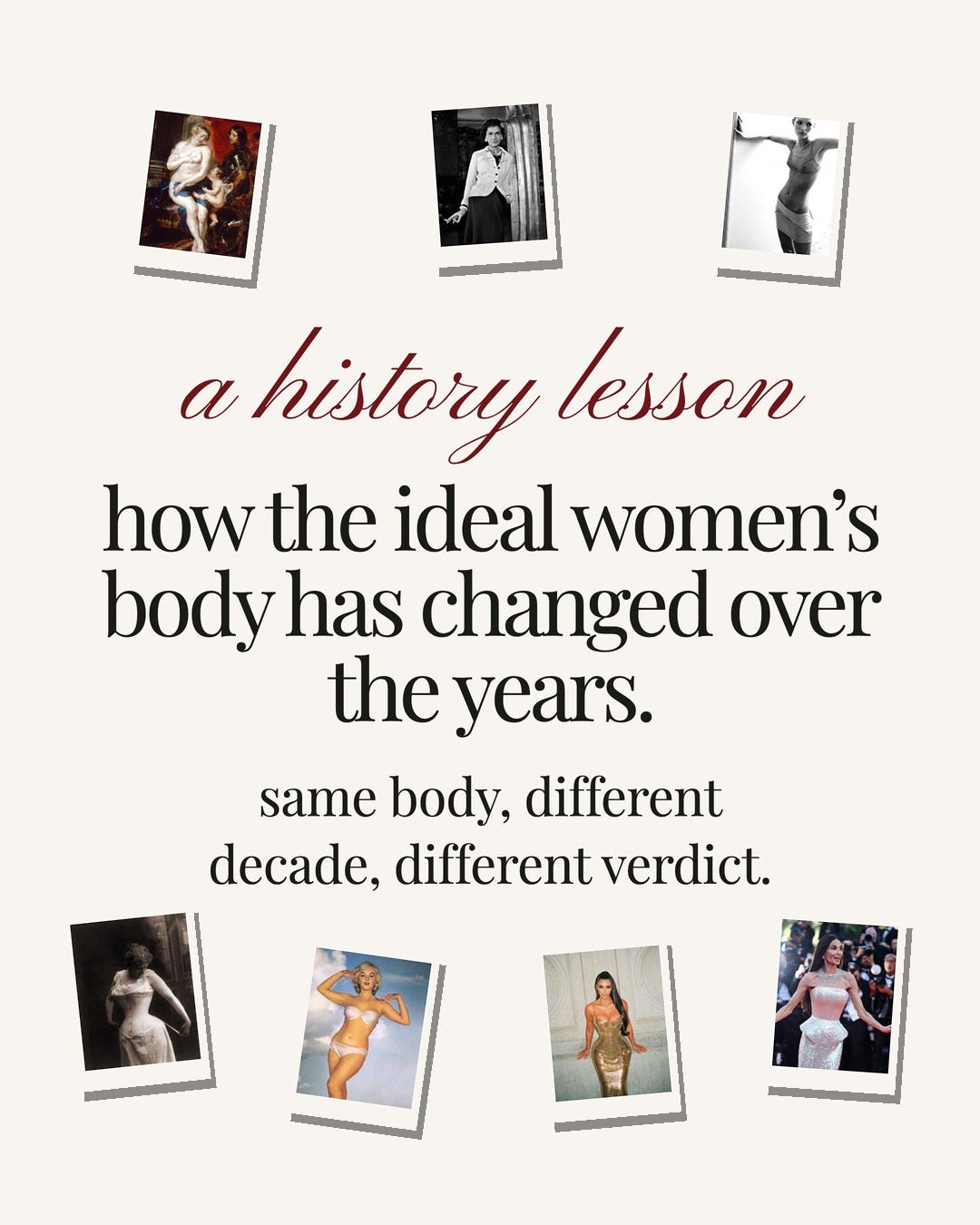
So far, we’ve looked at how body size became a moral and racial marker long before medicine got involved. This week, we look at the industry that has arguably done more than any other to define what a “good” body looks like: fashion. We saw this recently with the Victoria's Secret show. They almost set the beauty standard: something attainable for women.
Over the 20th century, women gained the vote, entered the workforce and threw away their corsets. And yet we are still stuck in this ideology of the body and trying to fit and change ourselves to fit unrealistic standards.
If women gained more freedom over the last century, why did we become prisoners to unachivable beauty standards?
Era 1: Coco Chanel and the end of the corset (1900s to 1930s)
At the start of the 20th century, a fashionable woman’s shape was still built by a boned corset.
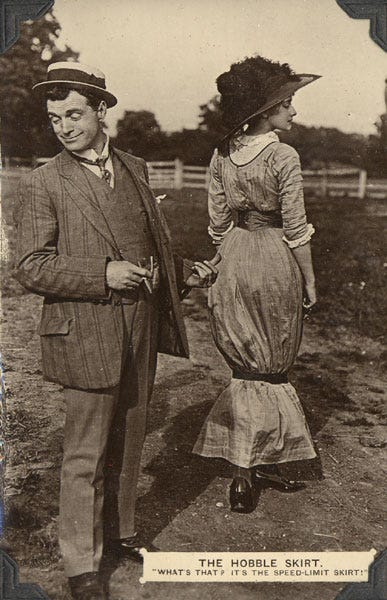
The first major designer Parisian couturier Paul Poiret. According to the Metropolitan Museum of Art, he freed the body “first from the petticoat in 1903 and then from the corset in 1906.” A few years later, in 1910, he introduced the “hobble skirt”, so narrow at the hem that women could barely walk . It’s the first example of a pattern you’ll see in every era of this issue:
one restriction is removed, and another is added.
What really changed women’s clothes, though, was the First World War. When men left for the front, women took their places. In Britain, over 600,000 women took on roles in industry previously done by men, many in munitions factories. You can’t fill shells in a corset and a long skirt. In 1918, women over 30 who met a property qualification also won the vote, partly in recognition of their war work. It took until 1928 for women to vote on the same terms as men.

Our clinic is open for one-to-one consultations, offering nutrition support alongside supplements and investigatory testing. Book your free intro call at: leya.health
This is the world in which Gabrielle “Coco” Chanel built her name.
During the war, couture fabrics were scarce, and women needed practical clothes for their new lives. Chanel turned to jersey, an inexpensive fabric then mainly used for men’s underwear, sportswear and stockings, and made it fashionable. She borrowed freely from menswear and sportswear, and her guiding principles, in the V&A’s words, were “comfort, simplicity and wearability.” Decades later, she still dismissed “waist cinchers, padded bras, heavy skirts, and stiffened jackets” as illogical.
So far, a story of liberation.
However, Chanel’s straight, fluid lines hung best on a slim, almost boyish frame, and the 1920s “flapper” look took this to its extreme. Undergarments with names like the “Flatter-U” and “Boyshform” were sold to flatten the bust and slim the hips. As one fashion writer put it in 1925:
“The boyish figure sans bust and curves and waistline is the ideal silhouette”
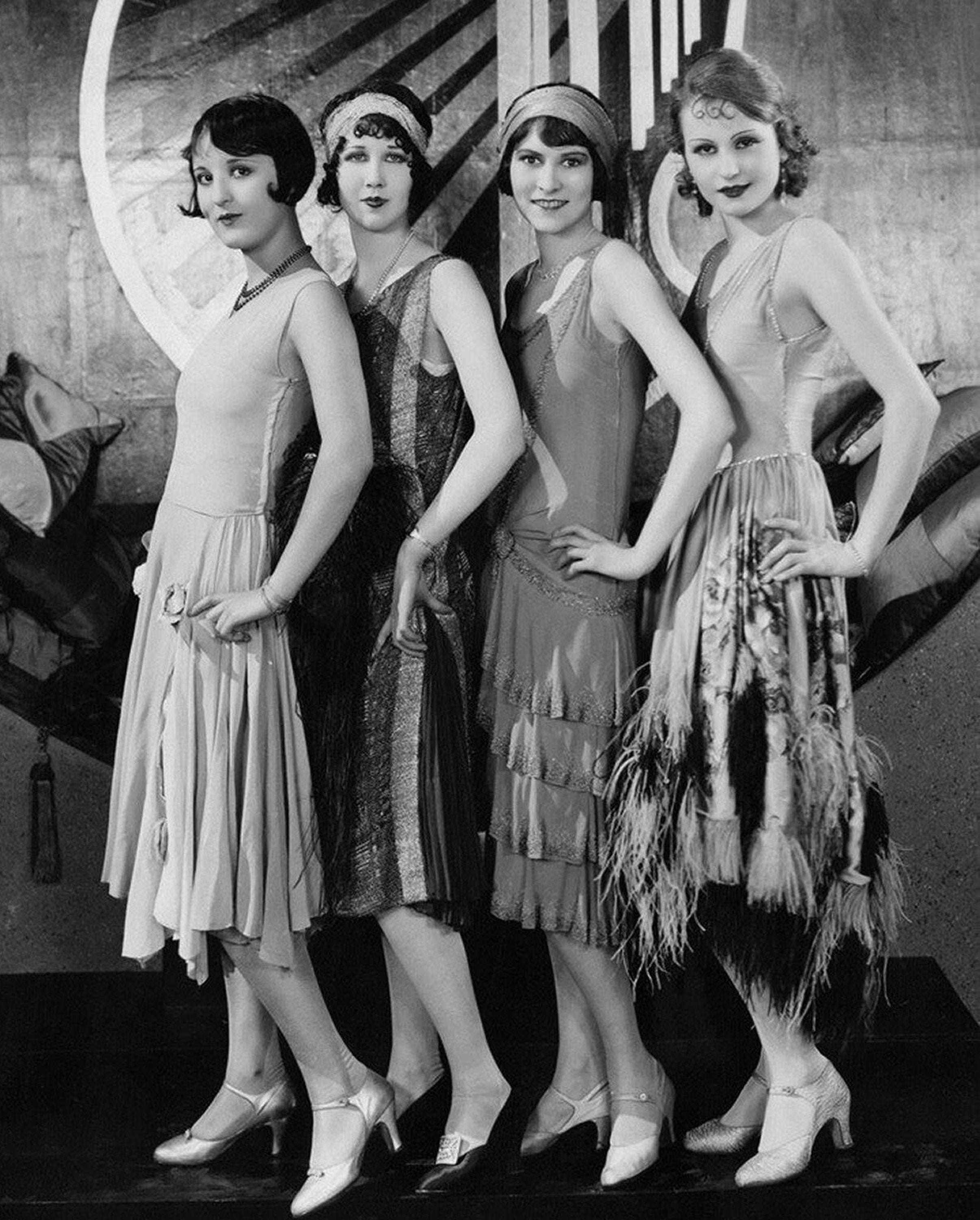
The corset came off, but the expectation didn’t. Instead of a garment shaping the body, the body itself now had to be the right shape. I think this is one of the most important shifts in the whole story: the restriction moved from the outside to the inside.
Era 2: Dior and Marilyn Monroe (1940s to 1950s)
Twenty years later, history repeated itself on a bigger scale.
In December 1941, Britain extended conscription to women: all unmarried women and childless widows aged 20 to 30 could be called up. By mid-1943, almost 90% of single women and 80% of married women were working in factories, on the land or in the forces. Clothing was rationed from 1941, and plain, economical “Utility” clothing became a patriotic choice (Utility clothing, summary of historical sources).
Then the war ended, and in February 1947 Christian Dior launched his first collection: sloping shoulders, a full bust and a cinched-in waist above long, full skirts
It caused outrage. A New Look day dress needed around 15 metres of fabric at a time when rationing was still in place, and in Paris some people were so angry they tore clothes off Dior’s models in the street.
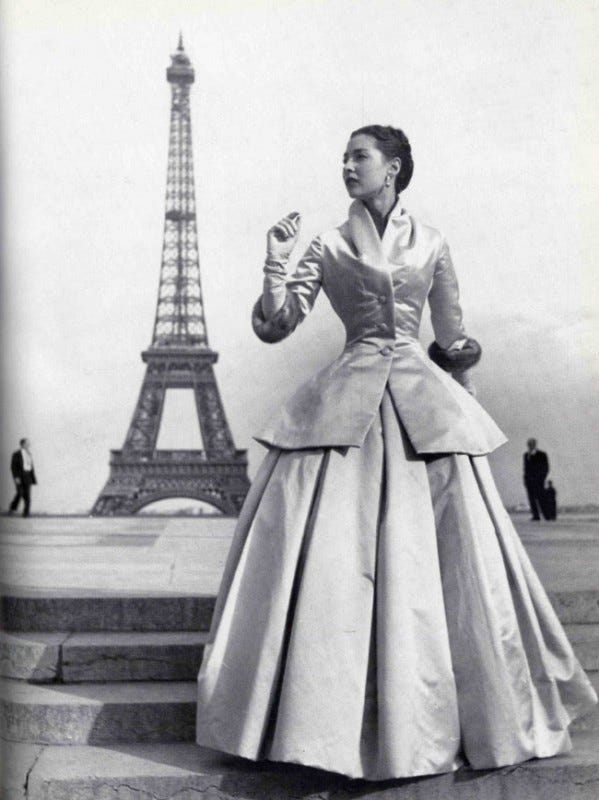
Critics argued that after women had spent the war running factories and farms, the cinched waist and heavy skirts were a step back into the home. Notice the echo of 1919. Once again, the end of a war brought pressure on women to step back, and this time fashion was part of the message.
The face of this era was Marilyn Monroe. Curves in specific places, with a very small waist. Sounds familiar?
Era 3: Kate Moss and “heroin chic” (1960s to 1990s)
From the late 1950s, researchers began tracking the “ideal” female body. One study analysed Miss America contestants and Playboy centrefolds from 1959 to 1978. Both became significantly thinner over those 20 years, while young women in the general population became heavier. Over the same period, diet articles in six popular women’s magazines rose significantly. A follow-up found that between 1979 and 1988, these women weighed 13% to 19% less than expected for their age, and Miss America contestants kept getting thinner.
1959 to 1988 is also the period of second-wave feminism: the fight for equal pay, reproductive rights and access to careers. As women gained ground in public life, the ideal body kept shrinking. In 1990, the writer Naomi Wolf argued in The Beauty Myth that this was no coincidence, and that pressure on women’s appearance grew to fill the space left by older restrictions. Her most quoted line is: “Dieting is the most potent political sedative in women’s history” (Wolf, 1990).
By the mid-1990s, the trend reached its peak. Kate Moss became the face of a look the press called “heroin chic”: very thin, pale, fragile-looking models photographed in drugged-looking poses. In 1997, after the overdose death of a young fashion photographer, US President Bill Clinton publicly criticised the industry, saying, “You do not need to glamorise addiction to sell clothes”
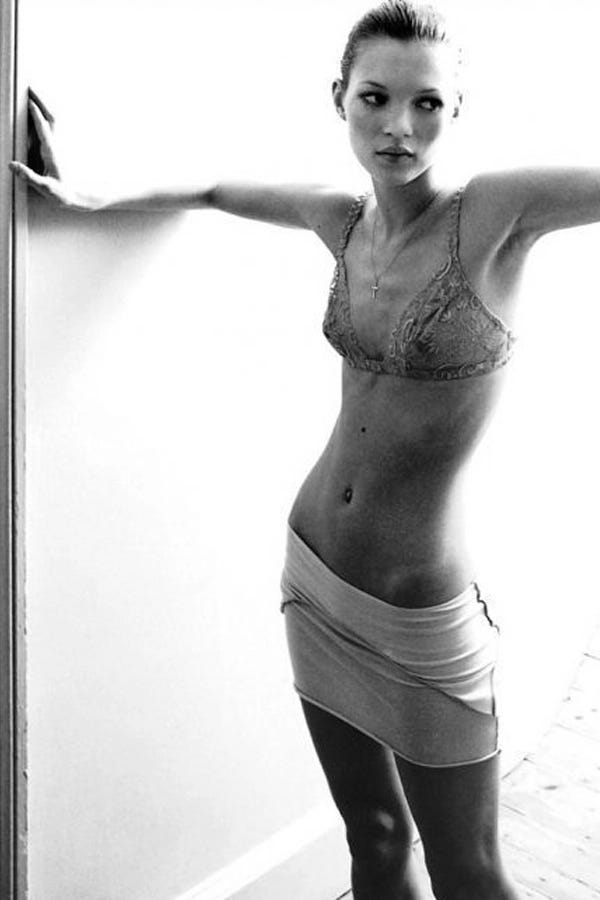
Moss herself later became associated with a 2009 interview in which she shared a motto about thinness feeling better than food tastes. In 2018, asked about it on NBC, she seemed to regret it, explaining it had been a “jingle” she and her flatmates used to repeat when they were young. I don’t share this to criticise her. She was a young woman working in an industry that rewarded one body type above all others. I share it because it shows how deeply that industry’s message can be absorbed, even by the people at the centre of it.
Era 4: Kim Kardashian and the “curvy” era (2010s)
In the 2010s, it looked like the thin ideal had finally been overturned. Kim Kardashian became one of the world's most influential women, and the ideal swung toward curves: a full bust and hips, and a very defined waist. Some celebrated this as a win for bigger bodies.
But look closely and it’s the 1950s hourglass again, with an even more extreme ratio between waist and hips. For most women, it was no more achievable than heroin chic. It simply moved the target, often towards the gym, waist trainers and, for some, cosmetic surgery.
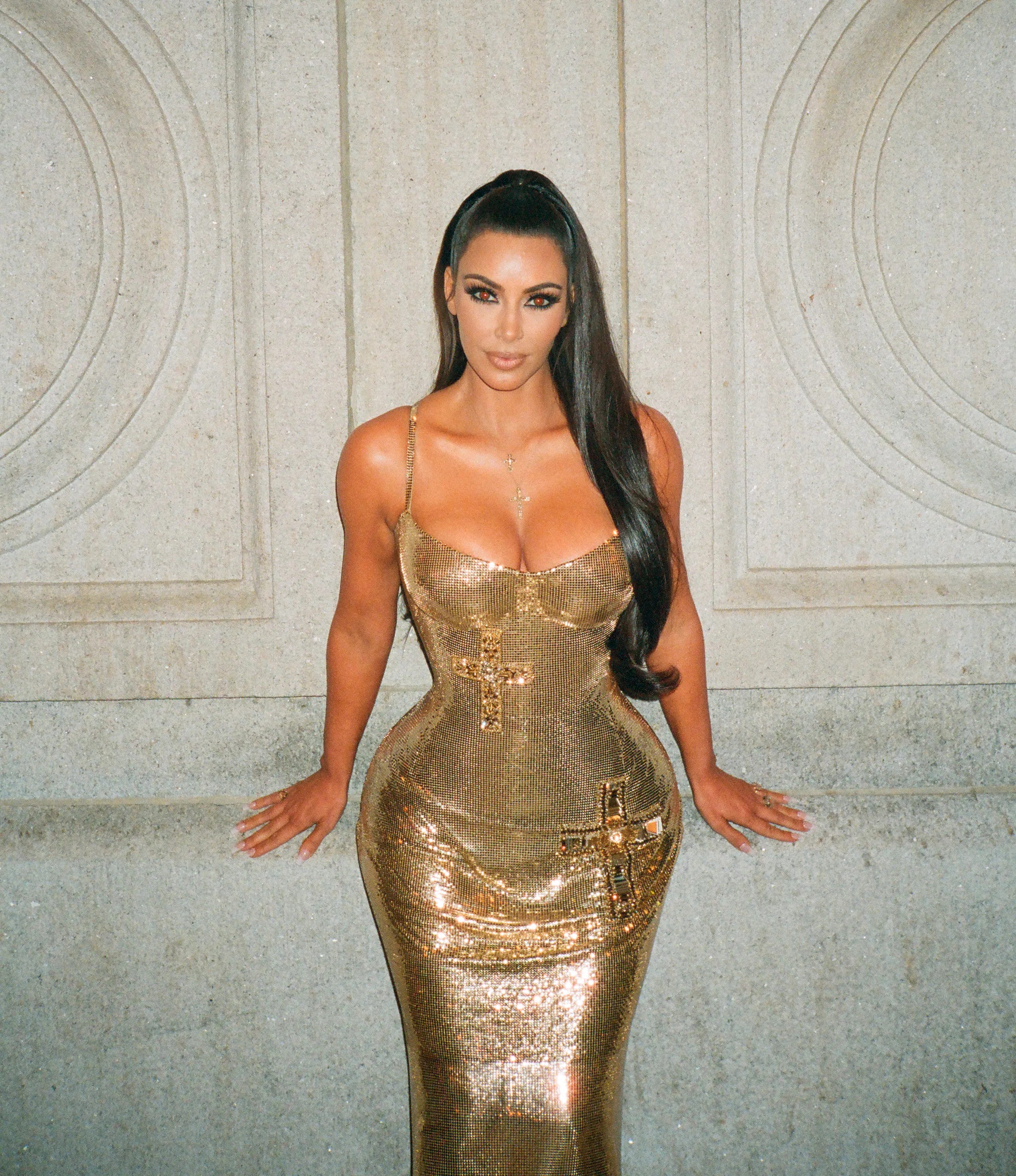
Then, in 2022, came a moment that ties this whole issue together. For the Met Gala, Kim Kardashian wore the dress Marilyn Monroe had worn to sing “Happy Birthday” to President Kennedy. To fit into it, she told Vogue on the red carpet that she had lost 16 pounds in three weeks, cutting out sugar and carbohydrates, and later said she had also run twice a day and worn a sauna suit. When she was criticised, she said she “didn’t do anything unhealthy” (Yahoo Entertainment, 2022).
I find this moment striking, not because of her choices, but because of what it represents. The most famous “curvy” woman of her generation had to shrink to fit the waist of the most famous “curvy” woman of the 1950s. Even the curves were always meant to come with a very small waist.
Era 5: Today, and the Ozempic effect (2020s)
In June 2021, the US Food and Drug Administration approved semaglutide, sold as Wegovy, for weight management in people with obesity or overweight with a weight-related condition (BioSpace, 2021). Semaglutide is the same medicine sold for type 2 diabetes as Ozempic, and that name has become shorthand for a whole cultural moment.
Within a few years, the runway had changed. According to Vogue Business, of more than 9,000 looks at the Spring/Summer 2026 shows in New York, London, Milan and Paris, 97.1% were worn by very small models and just 0.9% were plus-size. Vogue Business has linked this return to very thin models directly to the boom in weight-loss drugs.
I want to be careful here, because many of you reading this may be taking a GLP-1 medicine, and that is not what I’m questioning. For women with PMOS, these medicines can be a genuinely useful tool. A 2023 meta-analysis of 11 randomised controlled trials found that GLP-1 medicines improved menstrual regularity, insulin resistance and natural pregnancy rates in women with PCOS. A more cautious 2026 meta-analysis, also of 11 trials, found modest short-term weight loss, but said the evidence for metabolic, reproductive and psychological benefits was still uncertain because the data were low quality So the honest answer is promising, but still unfolding.
What I’m questioning is something different: what happens when a medicine becomes a fashion trend. In every era of this story, women were sold a way to reshape their bodies to fit the clothes: corsets, then bust flatteners, then girdles, then diets, then surgery. The newest tool is an injection. The clothes no longer fit the body. The body is expected to fit the clothes.
Does any of this actually affect us?
It’s fair to ask whether runway images and celebrities really change how ordinary women feel. Well, it comes to no shock that it does:
A meta-analysis of 77 studies found that exposure to media images of the thin ideal was linked to greater body dissatisfaction, stronger internalisation of the thin ideal, and more disordered eating behaviours and beliefs in women.
I really hope you are seeing the trend I am seeing. First, the ideal body size is set by an industry with billions of dollars in marketing, using the body of a woman as a tool to generate profit. As soon as one body is in trend, they switch to another so we stay stuck in this loop.
Women also fall for this ideal, forgetting that these people are naturally slim and/or spend a lot of money and time on teams that make them look the way they do.
Women with PMOS
A 2023 systematic review and meta-analysis of 9 studies, involving more than 1,700 women, found that women with PMOS reported significantly more body image concerns than women without it, including more dissatisfaction with their appearance, more preoccupation with being overweight and lower satisfaction with their weight.
I don’t think it’s hard to see part of the picture. Many of the visible signs of PMOS, such as weight changes, excess hair growth and acne, sit in direct contrast to the narrow ideals fashion has sold for a century. When the “standard” body was never designed with you in mind, it’s not surprising that you feel you don’t fit it.
Next issue
Fashion set the ideal. But someone had to sell women the means to reach it. Next week, we look at the weight loss industry: calorie counting, bathroom scales, cigarettes sold as appetite suppressants, diet pills, and how social media became the industry’s newest channel.
See you next Sunday,
Francesca
References
AP. (2023, September 13). The legend lives on: New exhibition devoted to Chanel’s life and work opens at London’s V&A museum. https://www.ksat.com/entertainment/2023/09/13/the-legend-lives-on-new-exhibition-devoted-to-chanels-life-and-work-opens-at-londons-va-museum/
BioSpace. (2021, June 4). FDA approves new drug treatment for chronic weight management, first since 2014. https://www.biospace.com/fda-approves-new-drug-treatment-for-chronic-weight-management-first-since-2014
CNN AllPolitics. (1997, May 21). Clinton decries ‘heroin chic’ fashion look. https://www.cnn.com/ALLPOLITICS/1997/05/21/clinton.mayors/
Coco Chanel. (n.d.). In Wikipedia, summarising Picardie (2010), Vaughan (2011) and declassified French records. https://en.wikipedia.org/wiki/Coco_Chanel [FRAN: placeholder source, replace before publishing]
Davitadze, M., Malhotra, K., Khalil, H., Hebbar, M., Tay, C. T., Mousa, A., Teede, H., Brennan, L., Stener-Victorin, E., Kempegowda, P., et al. (2023). Body image concerns in women with polycystic ovary syndrome: A systematic review and meta-analysis. European Journal of Endocrinology, 189(2), R1–R9. https://doi.org/10.1093/ejendo/lvad110
Forslund, M., Wändell, P., Forsberg, L., Österberg, M., Dagerhamn, J., Wernersson, E., Kärrman Fredriksson, M., Ringborg, A., & Lindén Hirschberg, A. (2026). GLP-1 receptor agonist treatment in women with polycystic ovary syndrome: A systematic review and meta-analysis. European Journal of Endocrinology, 194(3), 25–39. https://doi.org/10.1093/ejendo/lvag033
Garner, D. M., Garfinkel, P. E., Schwartz, D., & Thompson, M. (1980). Cultural expectations of thinness in women. Psychological Reports, 47(2), 483–491. https://doi.org/10.2466/pr0.1980.47.2.483
GOV.UK History of Government. (2015, April 21). The women of the Second World War. https://history.blog.gov.uk/2015/04/21/the-women-of-the-second-world-war
Grabe, S., Ward, L. M., & Hyde, J. S. (2008). The role of the media in body image concerns among women: A meta-analysis of experimental and correlational studies. Psychological Bulletin, 134(3), 460–476. https://doi.org/10.1037/0033-2909.134.3.460
Imperial War Museums. (n.d.). The women war workers of the North West. https://www.iwm.org.uk/history/the-women-war-workers-of-the-north-west
Mass Observation Archive. (2026). What was the big fashion controversy of 1947? https://massobs.org.uk/2026/06/03/what-was-the-big-fashion-controversy-of-1947/
Metropolitan Museum of Art. (n.d.). Paul Poiret (1879–1944). Heilbrunn Timeline of Art History. https://www.metmuseum.org/essays/paul-poiret-1879-1944
NBC News. (2024). Is the era of body positivity over? Some experts worry about a return of ‘thinness’ as the norm. https://www.nbcnews.com/pop-culture/viral/era-body-positivity-experts-worry-return-thinness-norm-rcna184050
NPR. (2024, October). Victoria’s Secret fashion show returns following a 6-year hiatus. Via WBHM: https://wbhm.org/npr-story/victorias-secret-fashion-show-returns-following-a-6-year-hiatus
News24 / AFP. (2025). Thinness is back on catwalks, and the data proves it (reporting the Vogue Business Spring/Summer 2026 size inclusivity report). https://www.news24.com/life/wellness/body/thinness-is-back-on-catwalksand-the-data-proves-it-20251017-1243
Postrel, V. (2011). Hollywood auction ends myth of zaftig Marilyn. Bloomberg. As quoted in Outside the Beltway: https://outsidethebeltway.com/marilyn-monroe-was-not-a-size-12/
Restoration of Pre-War Practices Act 1919. (n.d.). In Wikipedia. https://en.wikipedia.org/wiki/Restoration_of_Pre-War_Practices_Act_1919 [FRAN: placeholder source, replace before publishing]
RNZ. (2025). Is the Victoria’s Secret catwalk a ‘lone gesture’? https://www.rnz.co.nz/life/lifestyle/is-the-victoria-s-secret-catwalk-a-lone-gesture
Slate. (2012). Why our sizing system makes no sense. https://slate.com/culture/2012/01/clothing-sizes-getting-bigger-why-our-sizing-system-makes-no-sense.html
Snopes. (2018). Yes, Kate Moss said this about being skinny. https://www.snopes.com/fact-check/kate-moss-quote-about-being-skinny/
Stampler, L. (2014). The bizarre history of women’s clothing sizes. TIME. https://time.com/3532014/women-clothing-sizes-history/
UK Parliament. (n.d.). Conscription: the Second World War. https://www.parliament.uk/about/living-heritage/transformingsociety/private-lives/yourcountry/overview/conscriptionww2/
UK Parliament. (n.d.). Key dates: Women get the vote. https://www.parliament.uk/about/living-heritage/transformingsociety/electionsvoting/womenvote/keydates/
Utility clothing. (n.d.). In Wikipedia. https://en.wikipedia.org/wiki/Utility_clothing [FRAN: placeholder source, replace before publishing]
V&A. (n.d.). The ‘golden age’ of couture. https://www.vam.ac.uk/articles/the-golden-age-of-couture
V&A. (n.d.). What makes Chanel so iconic. https://www.vam.ac.uk/articles/what-makes-chanel-so-iconic
Wiseman, C. V., Gray, J. J., Mosimann, J. E., & Ahrens, A. H. (1992). Cultural expectations of thinness in women: An update. International Journal of Eating Disorders, 11(1), 85–89.
Witness2Fashion. (2014). Underpinning the 1920s: Brassieres, bandeaux, and bust flatteners (includes Evelyn Dodge, Delineator, July 1925). https://witness2fashion.wordpress.com/2014/04/27/underpinning-the-1920s-brassieres-bandeaux-and-bust-flatteners/
Wolf, N. (1990). The Beauty Myth: How Images of Beauty Are Used Against Women. Chatto & Windus.
Yahoo Entertainment. (2022). Kim Kardashian addresses Met Gala weight loss criticism: “I didn’t do anything unhealthy”. https://www.yahoo.com/entertainment/kim-kardashian-addresses-met-gala-214728197.html
Zhou, L., Qu, H., Yang, L., & Shou, L. (2023). Effects of GLP1RAs on pregnancy rate and menstrual cyclicity in women with polycystic ovary syndrome: A meta-analysis and systematic review. BMC Endocrine Disorders, 23(1), 245. https://doi.org/10.1186/s12902-023-01500-5
Disclaimer: We are all unique in our own ways, so this information is for educational purposes only. In my communications, I summarise research data and bring my experience. This shouldn’t be viewed as medical advice at any point. Please further consult your healthcare provider about your health needs.
References
CNN AllPolitics. (1997, May 21). Clinton decries ‘heroin chic’ fashion look. https://www.cnn.com/ALLPOLITICS/1997/05/21/clinton.mayors/
Davitadze, M., Malhotra, K., Khalil, H., Hebbar, M., Tay, C. T., Mousa, A., Teede, H., Brennan, L., Stener-Victorin, E., Kempegowda, P., et al. (2023). Body image concerns in women with polycystic ovary syndrome: A systematic review and meta-analysis. European Journal of Endocrinology, 189(2), R1–R9. https://doi.org/10.1093/ejendo/lvad110
Garner, D. M., Garfinkel, P. E., Schwartz, D., & Thompson, M. (1980). Cultural expectations of thinness in women. Psychological Reports, 47(2), 483–491. https://doi.org/10.2466/pr0.1980.47.2.483
Grabe, S., Ward, L. M., & Hyde, J. S. (2008). The role of the media in body image concerns among women: A meta-analysis of experimental and correlational studies. Psychological Bulletin, 134(3), 460–476. https://doi.org/10.1037/0033-2909.134.3.460
Kent State University Museum. (2015). Flapper Style: 1920s Fashion, Brassieres. https://flapperstyle.wordpress.com/black-silhouettes/brassieres/
Mass Observation Archive. (2026). What was the big fashion controversy of 1947? https://massobs.org.uk/2026/06/03/what-was-the-big-fashion-controversy-of-1947/
NBC News. (2024). Is the era of body positivity over? Some experts worry about a return of ‘thinness’ as the norm. https://www.nbcnews.com/pop-culture/viral/era-body-positivity-experts-worry-return-thinness-norm-rcna184050
News24 / AFP. (2025). Thinness is back on catwalks, and the data proves it (reporting the Vogue Business Spring/Summer 2026 size inclusivity report). https://www.news24.com/life/wellness/body/thinness-is-back-on-catwalksand-the-data-proves-it-20251017-1243
Postrel, V. (2011). Hollywood auction ends myth of zaftig Marilyn. Bloomberg. As quoted in Outside the Beltway: https://outsidethebeltway.com/marilyn-monroe-was-not-a-size-12/
Slate. (2012). Why our sizing system makes no sense. https://slate.com/culture/2012/01/clothing-sizes-getting-bigger-why-our-sizing-system-makes-no-sense.html
Stampler, L. (2014). The bizarre history of women’s clothing sizes. TIME. https://time.com/3532014/women-clothing-sizes-history/
UK Parliament. (n.d.). Key dates: Women get the vote. https://www.parliament.uk/about/living-heritage/transformingsociety/electionsvoting/womenvote/keydates/
V&A. (n.d.). The ‘golden age’ of couture. https://www.vam.ac.uk/articles/the-golden-age-of-couture
V&A. (n.d.). What makes Chanel so iconic. https://www.vam.ac.uk/articles/what-makes-chanel-so-iconic
Wellesley College. (n.d.). Making a pattern for the American woman: Clothing sizing, beauty standards, and constructions of the consumer in the United States. https://www1.wellesley.edu/sites/default/files/assets/departments/americanstudies/files/making_a_pattern_for_the_american_woman_final_-_google_docs.pdf
Wiseman, C. V., Gray, J. J., Mosimann, J. E., & Ahrens, A. H. (1992). Cultural expectations of thinness in women: An update. International Journal of Eating Disorders, 11(1), 85–89.
Witness2Fashion. (2014). Underpinning the 1920s: Brassieres, bandeaux, and bust flatteners (includes Evelyn Dodge, Delineator, July 1925). https://witness2fashion.wordpress.com/2014/04/27/underpinning-the-1920s-brassieres-bandeaux-and-bust-flatteners/
Disclaimer: We are all unique in our own ways, so this information is for educational purposes only. In my communications, I summarise research data and bring my experience. This shouldn’t be viewed as medical advice at any point. Please further consult your healthcare provider about your health needs.